Heritage & Culture
Discover Lyon
Founded by the Romans, with many preserved historical areas, Lyon is the archetype of the heritage city, as recognised by UNESCO. Lyon is a vibrant metropolis which makes the most out of its unique architectural, cultural and gastronomic heritage, its dynamic demographics and economy and its strategic location between Northern and Southern Europe.
The city itself has about 480,000 inhabitants. However, the direct influence of the city extends well over its administrative borders, with the population of Greater Lyon (which includes 57 towns or communes): at about 2.1 million. Lyon and its metropolitan area are rapidly growing and getting younger, because of their economic attractiveness.
The Districts
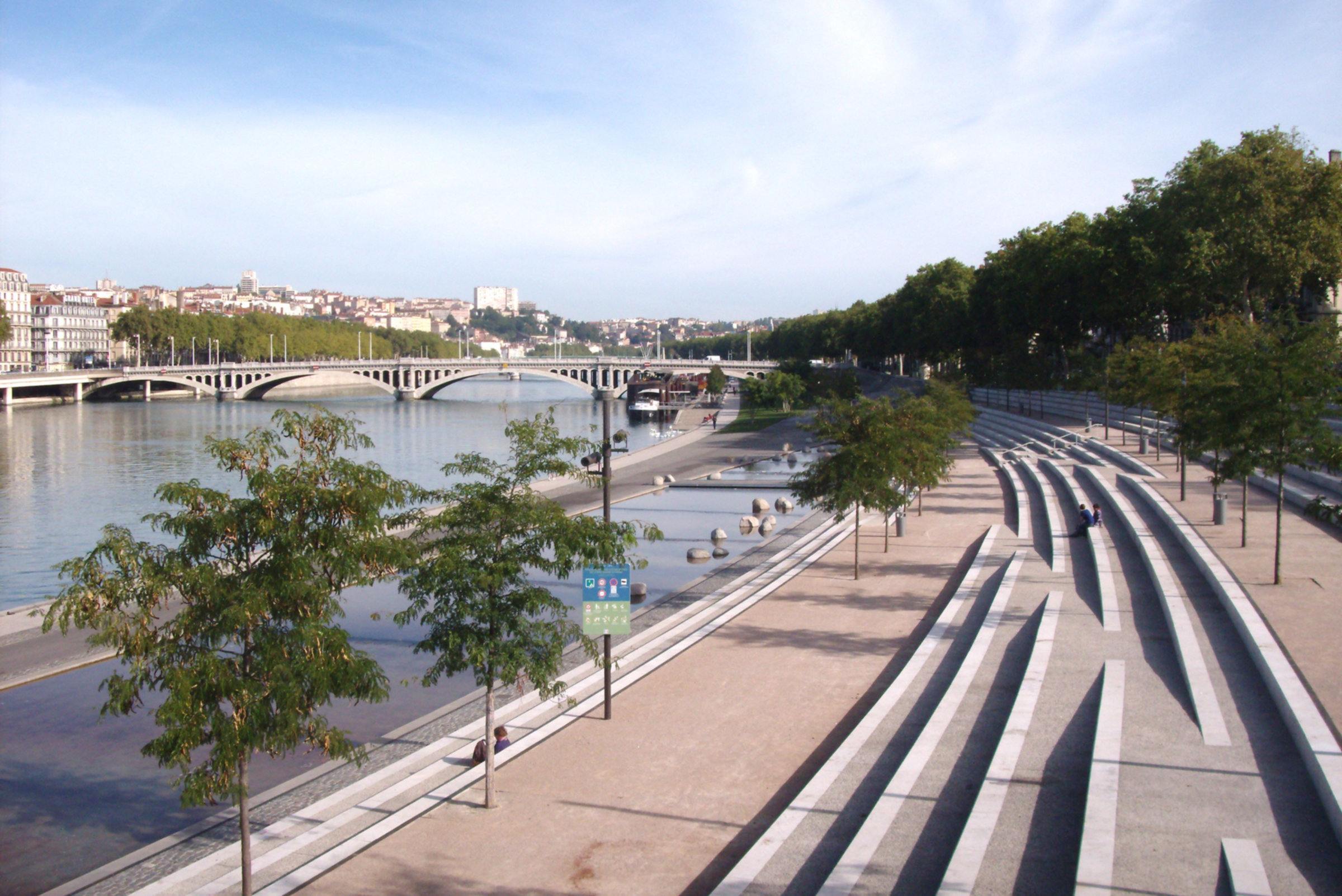
Lyon is shaped by its two rivers, the Rhône River (to the East) and the Saône (to the West), which both run North-South. The main areas of interest are:
Fourvière
Also known as "the hill that prays" due to the numerous churches and religious institutions it hosts. The hill was also the place where the Romans settled.
Vieux Lyon (Old Lyon)
The Renaissance area, along the right bank of the Saône.
Presqu'île
Between the two rivers, the real heart of the city.
Croix-Rousse
North of Presqu'île, it was home to the silk workers (canuts) until the 19th century. This industry has shaped the unique architecture of the area.
Guillotière
A village atmosphere, an atypical and lively district with many gourmet addresses.
Part-Dieu
The main business district and home to the main train station of Lyon.
Brotteaux
The wealthiest district, next to the beautiful Tête d'Or park.
Confluence
An emerging district with great contemporary architecture in a former industrial area.

Presqu'île
The peninsula is the true center of Lyon. Very lively, it is the district of shops, restaurants and bars. On the Saône side, the Renaissance buildings echo those of the Old Lyon, particularly on quai Saint-Antoine and rue Mercière. Rue de la République, which leads from Place des Terreaux to Place Bellecour, is a beautiful Haussmann-style artery with a concentration of luxury shops. Between Place Bellecour and Perrache, the district of Ainay, around the Romanesque basilica of the same name, offers a haven of peace with its 17th and 18th century mansions.
Hôtel de ville de Lyon
One of the most beautiful historic buildings in town, it is very imposing (it faces the Place des Terreaux but also the Place de la Comédie; in front of the Opera House).
Place des Terreaux
For many people in Lyon, it is the most beautiful square in the city with a grandiose setting: the classical facades of the town hall, the Palais Saint-Pierre and the presence of Bartholdi's "4 Rivers" fountain are reflected in the 68 water jets of the square.
Opera de Lyon
The 1826 theatre built by Chenavard and Pollet was completely redesigned and only the façades and the foyer on the first floor were kept.
Fresque des Lyonnais
This impressive painted wall portraits some of the most famous people who were born in Lyon, from Renaissance poet Louise Labé to the Lumière brothers, the inventors of cinema, to chef Paul Bocuse.
Place Sathonay
A charming neighbourhood square planted with old plane trees. Just sit at a terrace, watch the locals playing pétanque and enjoy the mood.
Eglise Saint-Nizier
Very nice church of flamboyant Gothic style.
Rue Mercière
This cobblestone pedestrian street is the only significant remain from the Renaissance in Presqu'île. The name of the street refers to the clothing industry. There are traboules connecting the street to the buildings on the Saône bank.
Place des Jacobins
Beautiful square with a central fountain (1885) by architect Gaspard André and sculptor Degeorges.
Hôtel-Dieu
The majestic Hôtel-Dieu was the oldest hospital in Lyon and is one of the largest buildings in Presqu'île. The facade along the river Rhône is over 300 m (984 ft) long. The first hospital was built in 1184-1185; it was modified several times before Soufflot designed the current building, built from 1741 to 1761. The large dome was completed in 1765.
Théâtre des Célestins
The building has a beautiful Italian-style facade. In the middle of the quiet plaza outside the theatre stands a strange periscope in which you can see rotating geometric shapes, like a kaleidoscope.
Place Bellecour
The largest pedestrian square in Europe. In the center stands the equestrian statue of Louis XIV ("under the horse's tail" is a usual meeting point for locals).
Basilique Saint-Martin d'Ainay
The only entirely Romanesque church in Lyon, dating back to the 11th-12th centuries. The abbey of Ainay was one of the most powerful in France between the 13th and the 16th centuries. A must-see for its very nice atmosphere.
Vieux Lyon
After Venice, the Old Lyon is the largest Renaissance area in Europe. The human settlement of this district dates back to Roman times, but its current appearance, with its narrow alleys, dates from the Middle Ages. The buildings were built in the 15th, 16th and 17th centuries, notably by wealthy foreign merchants (Italian, Flemish and German) installed in Lyon because of its 4 annual fairs. The buildings of Lyon at the time were considered to be the highest in Europe.
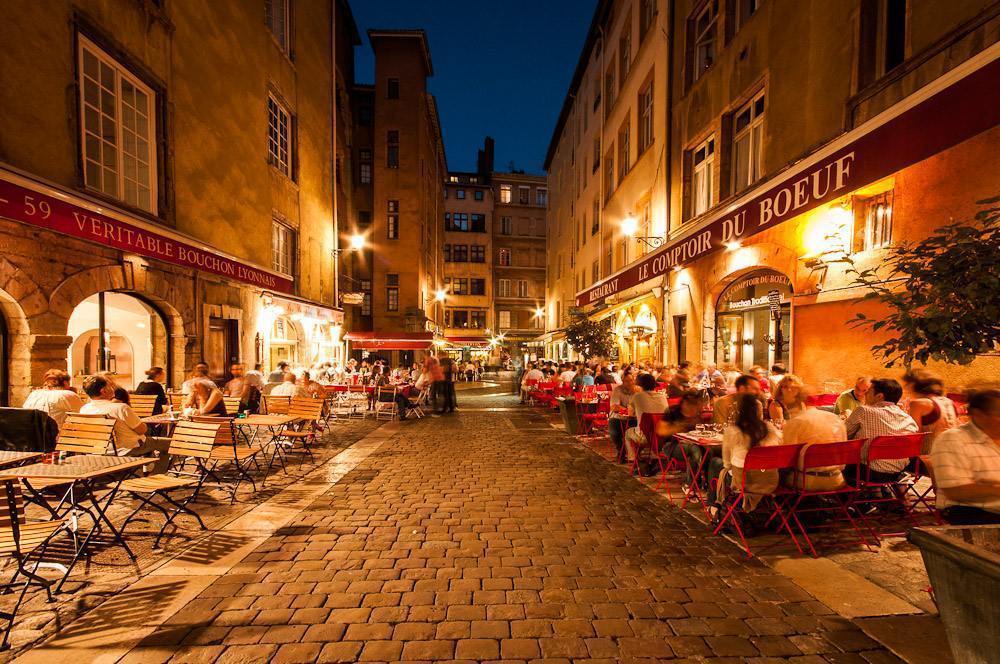
Entirely restored during the 1980s and 1990s, the St. Jean, St. Paul and St. Georges neighbourhoods offer visitors alleys lined with colourful buildings, animated by craft shops, housing some of the city's best restaurants. These alleys are mainly connected by traboules, the city's architectural speciality. This area offers pleasant walks, all in an atmosphere of yesteryear and Italy...
Saint Paul
North of place du Change, was the commercial area during the Renaissance.
Saint Jean
Between place du Change and St Jean cathedral, was home to most wealthy families: aristocrats, public officers, etc.
Saint Georges
South of St Jean, was a craftsmen's district.
The area is generally crowded in the afternoon, especially at weekends. To really enjoy its architectural beauties, the best time is therefore the morning. Around lunchtime, the streets somewhat disappear behind restaurant terraces, postcard racks and the crowd of tourists.
Cathédrale Saint-Jean
Built between 1180 and 1480, it is mostly of Gothic style with Romanesque elements. The cathedral hosts a spectacular astronomical clock originally built in the 14th century.
Jardin archéologique Saint-Jean
Next to Saint-Jean cathedral, this small garden shows the remains of the religious buildings which occupied the site before the cathedral was erected. The oldest remains date back to the 4th century.
Les Traboules
The traboules are a typical architectural feature of Lyon's historical buildings. They are corridors which link two streets through a building, and usually a courtyard. Many traboules are unique architectural masterpieces, largely influenced by Italy and especially Florence.
Officially open to the public:
- 54 rue Saint Jean <> 27 rue du Boeuf (the longest in Lyon)
- 27 rue Saint Jean <> 6 rue des Trois Maries
- 2 place du Gouvernement <> quai Romain Rolland
To open the doors, just press the service button next to the door code keyboard. If you are unable to enter from one side, try the opposite entrance. In the morning, many other doors are open for service (mail, garbage collecting), so more traboules are accessible. There are traboules in almost all buildings between Quai Romain Rolland and Rue St Jean/Rue des Trois Maries, and others between Rue St Jean and Rue du Boeuf.
Cours Renaissance
Some others buildings have very beautiful courtyards. The most outstanding are: Maison du Chamarier (37 rue St Jean) and Maison du Crible (16 rue du Boeuf), in which stands the famous "Pink Tower".
Rue Saint Jean
This beautiful cobblestone pedestrian street is the main axis of the area. It is full of souvenir shops and restaurants mainly intended for tourists.
Rue du Boeuf
Parallel to Rue Saint Jean, this street is much more quiet and just as beautiful. It also has a number of restaurants, more expensive than in rue Saint Jean but, on average, much more worth the money.
Place du Change
The largest square in the area has two remarkable buildings. The Loge du Change, on the west side is now a Protestant church known as Temple du Change. Opposite is the Maison Thomassin, with its Gothic-style 14th-century facade. Above the 2nd floor windows are the arms of the King of France, of the Dauphin and of Duchess Annep of Brittany.
Rue Juiverie
Another typical street of Vieux Lyon. Check out the back courtyard at Hôtel Builloud (number 8); it has a magnificent gallery on the first floor, designed by Philibert Delorme.
Eglise Saint-Paul
A very nice church, with mixed Romanesque and Gothic styles. The oldest parts are from the 10th century.
Montée du Gourguillon
Picturesque street link to Fourvière. Around numbers 5-7 is Impasse Turquet, with the oldest houses of the city (13th/14th c.) and wooden balconies.
Palais de Justice
The historical court house was built between 1835 and 1842 by architect Louis-Pierre Baltard. It now hosts only the criminal court and the court of appeal.
Fourvière, Saint-Just
Take the funicular up the hill from Vieux Lyon metro station, or if you are fit, walk up Montée des Chazeaux, Montée St Barthélémy or Montée du Gourguillon. This is a 150 m (500 ft) vertical ascent approximately. Fourvière was the original location of the Roman Lugdunum. In the 19th century, it became the religious centre of the city, with the Basilica and the Archbishop's offices.
-
Basilique Notre-Dame de Fourvière
Built in 1872, dedicated to the Virgin Mary, this massive white marble church is a typical example of the 19th century "eclectic" style, with architectural elements recalling antique, classical and Gothic eras.
-
Panoramic viewpoint
Next to the basilica, offering the best view over the city. If the weather is clear, Mont Blanc can be seen in the distance. A perfect point to start your visit.
To go down: take Montée Cardinal Decourtray, then Rue Cléberg and Rue de l'Antiquaille which lead to the Roman theatres, or walk down through the Jardins du Rosaire towards Vieux Lyon.
-
Théatres Romains
These two well-preserved theatres are the most important remnant of the Roman city of Lugdunum. The Gallo-Roman museum was built next to them.
-
Saint-Just neighbourhood
South-west of the Roman theatres, has less famous but also interesting historical sites.
-
Eglise Saint-Irénée
The oldest church in Lyon, built on a Gallo-Roman necropolis which was in use for centuries, until the Middle Ages.
Croix-Rousse
More than any other part of the city, Croix-Rousse "the working hill" cultivates its village character. In fact, it is common for the inhabitants to say that they go "to Lyon" when they descend into the city centre. The market, which is held every day on the boulevard de la Croix-Rousse, is very lively.
Amphithéâtre des Trois Gaules
Built at the beginning of the 1st century AD, representatives of Gallic nations gathered here each year to swear allegiance to Rome and Augustus. Site of the first Christian martyrs execution in 177 AD.
Montée de la Grande Côte
This steep street has Renaissance buildings and offers a very beautiful panorama over the city from its top.
Le gros caillou
The symbol of the area.
Forts
St Nicolas and St Jean.
Traboules de la Croix-Rousse
The Croix-Rousse area has many unique traboules connecting different levels of the hill.
- 7 rue Mottet-de-Gérando <> 8 rue Bodin
- 9 place Colbert <> 14 bis montée St Sébastien (Cour des Voraces)
- 14 bis montée Saint-Sébastien <> 29 rue Imbert-Colomès
- 20 rue Imbert Colomès <> 55 rue Tables Claudiennes
- 30 bis rue Burdeau <> 17 rue René Leynaud (passage Thiaffait)
- 6 rue des Capucins <> 1 rue Sainte Marie des Terreaux
- 12 rue Sainte-Catherine <> 6 place des Terreaux
Mur des Canuts
Huge painted wall dedicated to the history and typical architecture of the Croix-Rousse hill.
Eglise Saint-Bruno
The only Baroque church in Lyon. Magnificent interior, especially the altar (by Servandoni, modified by Soufflot) and the canopy.
Jardin Rosa Mir
Built by Jules Senis Mir between 1957 and 1983. Mixes flowers, stones, greasy plants and more than 100,000 shellfish.